Tracing the history of the Basilica Cistern | Its role in Byzantine Constantinople

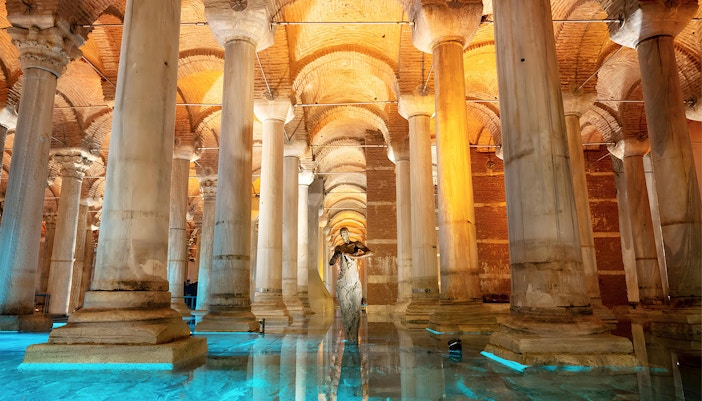
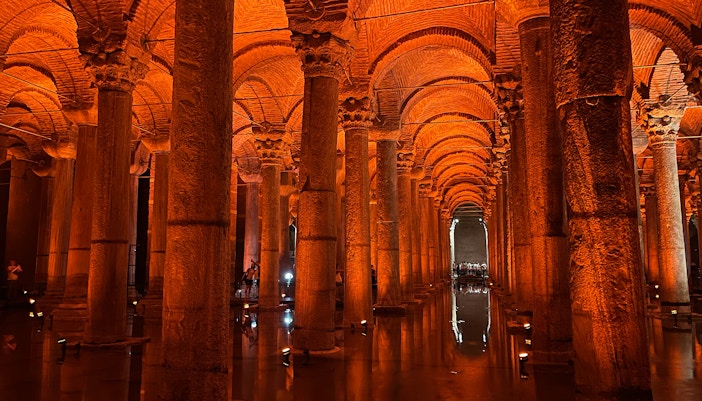
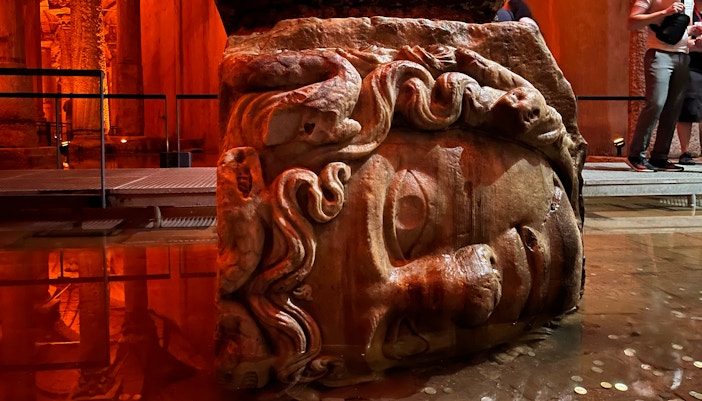
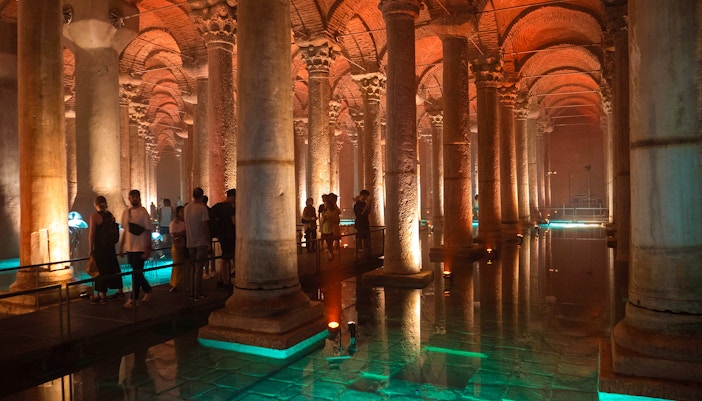
The Basilica Cistern, or the Yerebatan Sirnici (Sunken Palace), as it is commonly known, was constructed during the Byzantine era to supply water to the Imperial Palace and its surrounding buildings. This ancient water reserve has around 336 columns, 2 Medusa Heads, and many arches. Look out for the ‘Weeping Column’, one of its many columns, that has carvings of peacock and tree branches, in memory of the hundreds of slaves who sacrificed their lives during the cistern’s construction.

Basilica Cistern history timeline

  • 6th Century: The Basilica Cistern was constructed to supply water to the Byzantine Imperial Palace.
  • 16th Century: The underground cisternfunctioned as the Ottoman Empire’s water reserve and supplied water to the Topkapi Palace.
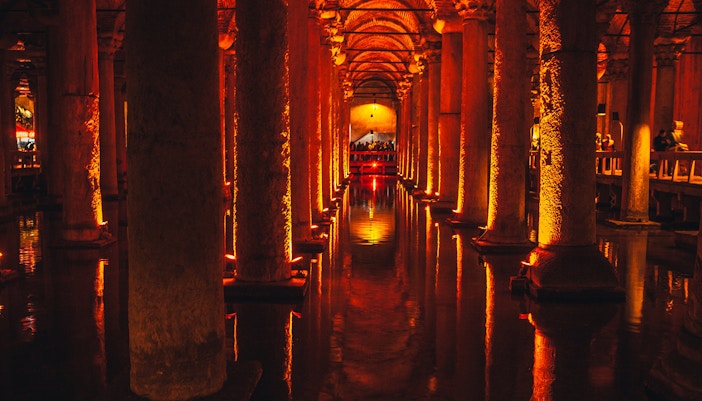
  • 20th Century: The cistern was restored by the Istanbul Metropolitan Municipality, illuminated with lights, and opened to the public as The Basilica Cistern Museum.

History of Basilica Cistern explained

Byzantine Era

6th Century 

The construction of the Basilica Cistern was commissioned by Byzantine Emperor Justinian I in the 6th century CE. It was built to supply water to the Great Palace and other buildings in the city. It features a vast network of vaulted ceilings supported by 336 marble columns. Many of the columns were repurposed from earlier structures, and some of them bear engravings and carvings from earlier civilizations, including the Roman and Greek eras.
Ottoman Era

16th Century

During the Ottoman reign in Turkey, the Basilica Cistern was used to supply water to the Topkapi Palace and its surrounding buildings. It was also used to sustain the city during times of drought or siege.  During the time of the Ottoman Empire, the cistern was restored twice: once when Sultan Ahmed III was ruling, and again when Sultan Abdulhamid II was in charge.

Modern Era

20th Century

Between 1955 and 1960, nine columns were covered with concrete to stop them from falling. Then, from 1985 to 1987, the Istanbul Metropolitan Municipality restored the Byzantine cistern completely and installed pathways for people to walk on. That's when they found the famous blocks with Medusa heads, which are important symbols of the cistern. After this restoration, the site was opened to the public as a museum.

Basilica Cistern today

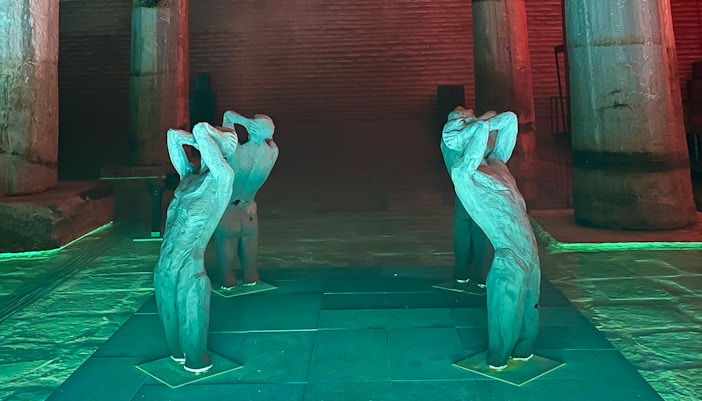
Today, the Basilica Cistern is one of the most popular tourist attractions in Istanbul. In addition to the rows of 336 columns and the 2 Medusa heads, the cistern also features a variety of other elements, including stone faces, branches, and peacocks carved on columns. It stands as a significant reminder of the ingenuity and skill of the ancient builders who constructed it. If you are interested in history or getting up close to the rich heritage and culture of Istanbul, make sure to visit the Basilica Cistern.

Plan your visit to the Basilica Cistern

Frequently asked questions about the Basilica Cistern history

The Basilica Cistern was constructed around 532 AD when Emperor Justinian commissioned it. It was used to supply water to the Imperial Palace and its surrounding buildings.

More reads

Basilica Cistern opening hours

Plan your visit to the Basilica Cistern

Basilica Cistern guided tours